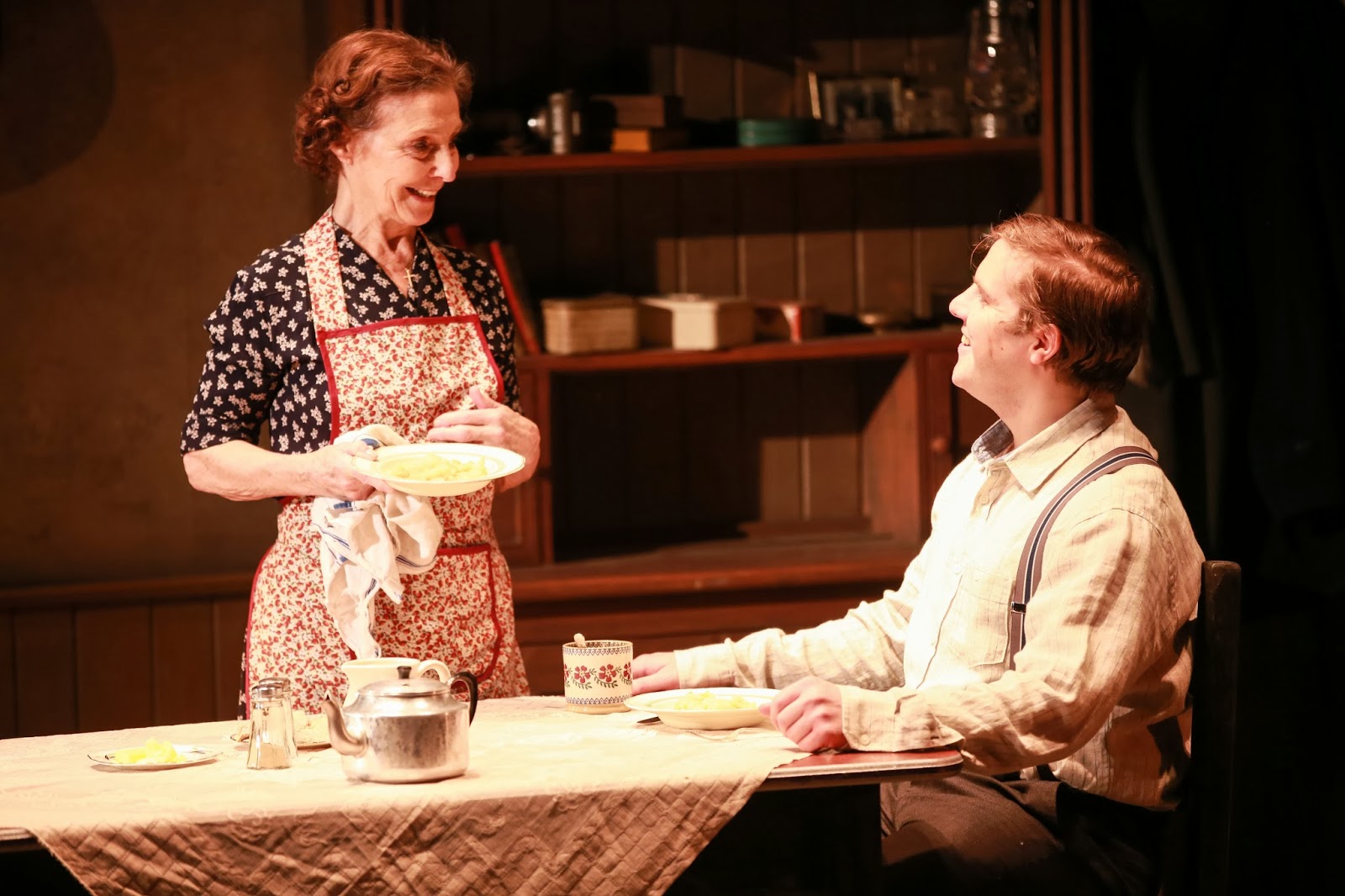
Shakespeare’s darkest tragedy, retold by one of the world’s greatest opera composers, comes to Belfast this week at the Grand Opera House.
Following a critically-acclaimed production of The Flying Dutchman in early 2013, NI Opera makes a welcome return with a new production of Verdi’s masterpiece, Macbeth.
Shakespeare’s tale of murder, madness and all-consuming lust for power inspired Verdi to write some of his finest, most gloriously gripping music, and Macbeth is as popular today as it was when it premiered in 1847.
In this spectacular new production, Director Oliver Mears and Designer Annemarie Woods take a fresh approach to this famous story. With the Ulster Orchestra conducted by Nicholas Chalmers, a superb Irish and international cast and a chorus drawn from across Ireland, this will be an unmissable event for fans of Shakespeare and Verdi alike.
Sung in English.
Cast:
Macbeth: Bruno Caproni / Paul Carey Jones (February 22)
Lady Macbeth: Rachel Nicholls / Miriam Murphy (February 22)
Macduff: Andrew Rees
Banco: John Molloy
Lady in Waiting: Doreen Curran
Malcolm: Aaron Cawley
Doctor: Nathan Morrison
Assassin: Christopher Cull
Read my reviews of previous NI Opera productions: The Flying Dutchman and Noye's Fludde
Read other Opera reviews: Elephant Angel, The Magic Flute and Otello
Read my review of Macbeth at the Lyric Theatre in 2012: Macbeth
Macbeth runs from Friday 21st - Sunday 23rd February at the Grand Opera House. Click here to book tickets.
New to Opera? It's ok to attend in jeans! Read here.
Sunday, 16 February 2014
Tuesday, 11 February 2014
Noel Coward's Brief Encounter - Wireless Mystery Theatre: Review
One doesn't really know what to expect when attending a Wireless Mystery Theatre performance. From War of the Worlds during Belfast Children's Festival, Scream Tea in White's Tavern or A Christmas Carol in the Ulster Hall, their work is always varied and sometimes unexpected.
Last night I went to the preview of Noel Coward's Brief Encounter. A classic of cinema, Brief Encounter is repeatedly voted the most-loved romance on screen, a tale of two lovers whose love can never be expressed. An innocent meeting of a married man (Stephen Beggs) and a married woman (Mary Lindsay) turns into a love affair which threatens to destroy their marriages, friendships and lives. The story starts at the end, so to speak, as Laura feels faint in the bustling train station and wishes her friend is dead because she won't stop talking. As the jigsaw is put back together, we find out why Laura feels the way she does, just who the mystery Doctor is she was saying goodbye to and why it was all so overwhelming.
Wireless Mystery Theatre use sound to great effect in this show. Using surround sound technology, trains rattle through the theatre, making the audience feel very much like they're right in the middle of the action. The effect of this is that we have to listen all the more intently to what is happening between the characters. For me, this just enhanced the secretive nature of the affair, feeling like I was eavesdropping on a couple and hearing their deepest desires.
Mary Lindsay is particularly suited to playing Laura Jesson. Her face spoke a thousand words as the guilt tore her apart and she fought with her inner, barely acknowledged desires. Stephen Beggs' Dr Harvey is dashing and handsome in his suit and hat and at times a little insistent. We never see Dr Harvey's wife and so all our thoughts are with Laura and her turmoil.
Despite some first night technical hitches, the performances induced a few tears from a couple of unnamed audience members, overwrought by the emotional difficulty of the unplanned romantic interlude and it's final goodbye. Indeed it was heard to be said how easy it would be for something like this to happen, a testament to Coward's writing engaging even the most restrained audience members with Laura's predicament.
For me, by far the most poignant part of the play is when Laura's husband Fred (Mark Claney) says 'You've been a long way away... Thank you for coming back to me'. Despite his blandness and apparent disinterest, he has noticed the whole time that Laura's mind was on something else.
Brief Encounter runs until Saturday 15th February in the Baby Grand.
Click here to book tickets.
Last night I went to the preview of Noel Coward's Brief Encounter. A classic of cinema, Brief Encounter is repeatedly voted the most-loved romance on screen, a tale of two lovers whose love can never be expressed. An innocent meeting of a married man (Stephen Beggs) and a married woman (Mary Lindsay) turns into a love affair which threatens to destroy their marriages, friendships and lives. The story starts at the end, so to speak, as Laura feels faint in the bustling train station and wishes her friend is dead because she won't stop talking. As the jigsaw is put back together, we find out why Laura feels the way she does, just who the mystery Doctor is she was saying goodbye to and why it was all so overwhelming.
Mary Lindsay is particularly suited to playing Laura Jesson. Her face spoke a thousand words as the guilt tore her apart and she fought with her inner, barely acknowledged desires. Stephen Beggs' Dr Harvey is dashing and handsome in his suit and hat and at times a little insistent. We never see Dr Harvey's wife and so all our thoughts are with Laura and her turmoil.
Despite some first night technical hitches, the performances induced a few tears from a couple of unnamed audience members, overwrought by the emotional difficulty of the unplanned romantic interlude and it's final goodbye. Indeed it was heard to be said how easy it would be for something like this to happen, a testament to Coward's writing engaging even the most restrained audience members with Laura's predicament.
For me, by far the most poignant part of the play is when Laura's husband Fred (Mark Claney) says 'You've been a long way away... Thank you for coming back to me'. Despite his blandness and apparent disinterest, he has noticed the whole time that Laura's mind was on something else.
Brief Encounter runs until Saturday 15th February in the Baby Grand.
Click here to book tickets.
Sunday, 9 February 2014
Philadelphia, Here I Come! at the Lyric Theatre: Review
Eleven years ago I saw Adrian Dunbar's Philadelphia, Here I Come! at the Millennium Forum in Derry. At the time I had been working in the arts for about a year and had seen a handful of small shows at the Old Museum Arts Centre.
As a child we didn't go to the theatre, I didn't read plays and I certainly hadn't heard of Brian Friel. I went off for a night in Derry and my first Friel experience. The show may have been amazing but I couldn't see it, I didn't understand it, I couldn't find a context in which it was relevant to me. In fact I'd forgotten I'd even seen it until very recently. I wracked my brain trying to remember the story, the characters, anything about the show that I could talk about if I was asked. But all I can remember is my first time in Derry, the bar in the Everglades and how long it took to get home.
To all my thespian friends out there, I know this shocks you. Over the past few days I've been told 'It's the most amazing play ever written' and 'he's the best playwright who ever lived'. In the back of my head I was wondering what I'd missed.
Last night I went to see Philadelphia, Here I Come!, the Lyric's 50th Anniversary production, directed by Andrew Flynn. It started quietly, Stella McCusker's voice barely audible from the back of the theatre. On a beautiful set, the actors drew me in to Friels' relatively simple story of a young man with no reason to stay in the small village of Ballybeg. His father barely speaks to him, the girl he loves has married someone else and the monotony is killing him.
Small moments of melancholy are brought alive by the lighting design, Kate appearing ghostly under blue light as he remembers their moments together and his silly mistake in losing her. Throughout the production, tiny areas of script are highlighted through the physical design. Subtle changes in lighting density darken the mood, the lamp in the bedroom highlights Gar's private space and soft lights pick out the table as a symbol of home. These are sometimes barely noticeable but just enough to draw the audience in to the overall feeling of melancholy and loneliness. The clock ticks time down on the wall as Gar's time to depart comes closer, the audience drawn in to the countdown until his new life in Philadelphia.
But for me it is the words which jumped out from the stage, the poetic pain of a broken heart, the hopeless sadness of having nothing to look forward to, the inability to feign happiness in a world to which you don't belong.
The discord between Gar's two personalities, Gar Private and Gar Public is pronounced. Gar Private is excitable, forward thinking and dismissive of Gar Public's sadness. He should look to the future, not to the past. He needs to move forward and stop thinking about home. Gavin Drea gave an outstanding performance as Gar Private, at times humorous and irreverent, his timing was impeccable and he trailed my emotions through the wringer a number of times throughout the performance. I especially thought the pacing between the two Gars worked really well.
When Gar Public was perked up by Gar Private, he never quite got just as excited, as is the norm in real life. Reality never quite matches the fantasy. When Gar Private was pulled down to earth by Gar Public, he matched his sadness. The equilibrium between the two sides of his personality pronounced the melancholy and loneliness and it was at these moments when I could feel my heart breaking.
The relevance of the Gar character/s to my own personality is pronounced. As part of me pushes myself forward, another part of me pulls back. I fought to leave my background, my closed minded views and my birth culture. But as with Gar Public, I am always drawn to home, to responsibility and to a sense of safeness. Taking a risk is difficult and scary. Everyone needs their Gar Private to get them through the fight of leaving something safe behind. This applies to all of us, whether it's leaving the parental home, breaking up with a partner, applying for a new job or changing religion.
I've spent some time thinking about whether Gar actually leaves home for Philadelphia or stays in Ballybeg and I'm guessing it's subjective. I don't think he does, but then I tend not to take risks, I like to play it safe, my need for security and concern for those left behind would win over. Other people would say he does go. Those people are willing to take risks, to go along with the adventurous part of their personality which propels them forward to try new things.
Mark Phelan's programme note points out the impact of emigration from Ireland and now also immigration to Ireland. He suggests that "plays like this are classics because their continuing relevance transcends both time and space". An audience anywhere is "easily able to identify their own Ballybeg". I would take this programme note further and suggest that Friel's play is not just about physical location or emigration from it. It's about mental emigration from one view to another, it's about growing older and forming your own opinion, it's about breaking away from your family's customs and culture and finding your own. I would suggest that this is why Friel's masterpiece is such a relevant play in this time and space in Northern Ireland today. It's also why I simply didn't get it when I saw it all those years ago. I hadn't broken away from my culture or background, I hadn't gone to university, I hadn't gone on the journey of self discovery which I've been on for the past 11 years.
The poetic, dark humour of Friels' story, his deep understanding of human nature and the direct relevance of his writing to me and my journey has hit me in the heart and I don't think it will ever let go.
Philadelphia, Here I Come! runs until 8th March on the Danske Bank stage of the Lyric Theatre. Click here to read more.
Don't forget Friels' lesser performed play Molly Sweeney opens this week in the Naughton Studio and also runs until 8th March. Click here for more info.
Friday, 31 January 2014
REVIEW: Stand Up Man: C21 Theatre Company
Much has been made of Tim McGarry's involvement in Stand Up Man. Being a comedian you would expect that it is Tim himself who is the Stand Up Man Thaddeus McGuinn but this role was filled by Nick Hardin.
But Thaddeus is not a funny man, well not anymore. He's over stressed, under paid and unappreciated. Well that's how he feels anyway. His wife of 26 years Maggie (Cathy Brennan-Bradley) is an alcoholic, suffering from OCD and is severely depressed. And it's all his fault.
A sparky script from American playwright Derek Murphy hinges on Thaddeus' inability to see what is right in front of his eyes. He has damaged his relationships with his wife and his son with his selfish behaviour and insular personality. They don't understand how much he has forfeited to save them, how important it was for him to have given Buster his name, how much Maggie should appreciate him.
Tim McGarry's portrayal of Thaddeus' alter ego, the Father McGuinn he was meant to be, is both irreverent and refreshing. His asides in the conversation add just the right amount of lightness to lift what is a very dark comedy. While Tim doesn't have a lot to do, his part is the most essential, balancing the darkness of the script with just enough humour to ensure the audience don't leave in tears.
Nick Hardin as Thaddeus, is spiteful and selfish as the character demands. We never really believe that he loves Maggie. Even as he realises what he has lost, his own self obsession demands his attention. His need to be funny supercedes every issue, whether forgetting his wedding anniversary, going to his son's school or a death in the family.
Kevin Patrick Keenan is a bright young actor and his portrayal of Buster grew on me throughout the second half. Buster is a difficult role to play. He is both adult and child, full of hatred for his father and love for his mother. His personality is a perfect mix of Thaddeus and Maggie, having inherited all his parents worst traits.
Cathy Brennan-Bradley as Maggie is a desperate and conflicted alcoholic. I wasn't sure whether I enjoyed this character or not. As a poor downtrodden women, a kept wife and an attention seeker I felt the underhand duplicity of her personality from the start. As we got to know Thaddeus, maybe we understood why. But I spent the whole first half just wanting her to leave him, to punch him and to show some balls.
While it seemed the pace was a little slow at times, not in keeping with the snappy writing, the show ticked along nicely, particularly in the second half when Buster was introduced. An interesting relationship developed between father and son and I found myself more and more engaged with Keenan's physical characterisation, his hands and the way he held himself reflecting his mood.
I found the ending perplexing. Had Thaddeus realised what he had done to his family in an effort to save them? Had he conquered his demons and atoned for his sins? Or was it just another wallow in self pity from a failed comedian and failed husband and father? Murphy makes a powerful comment on redemption and whether any of us really understand how the other thinks and feels.
You can watch what audience members thought about the show here http://vimeo.com/85430766
View the Trailer here: http://youtu.be/Fsns0D5c7z4
Stand Up Man runs in the Baby Grand until Saturday 8th February and you can book tickets here
after which the show will tour various venues across NI. More information is available here
Wednesday, 15 January 2014
Coming up: Stand Up Man by C21 Theatre Company
Stand Up Man follows Thaddeus McGuinn, played by Nick Hardin, a stand-up comedian who is one joke away from a mental breakdown. Disgraced ex-altar boy, Thaddeus, is about to face his toughest audience ever, his own sins. The play focuses on Thaddeus over one week, as he journeys back and forth between his audience and his family.
Well known Northern Ireland actor, comedian and TV personality, Tim McGarry will play a main role as Thaddeus’ alter ego as he visits his past and admits the errors of his way. This will be McGarry’s first serious theatre role after a successful, long-running career in comedy, radio and TV.
The play is written by Dublin born playwright Derek Murphy who now lives in New York. It is being produced by c21 Theatre Company from Belfast, led by producer Stephen Kelly and directed by Stephen Beggs.
Speaking about the play, Murphy said:
“Stand Up Man is a dark but humorous insight into the complex mind of a troubled Irish-American comedian which explores his guilt, shame and regrets in life. I think everyone knows someone a little like Thaddeus, our misguided anti-hero, so I hope Stand Up Man will resonate with our audiences.
“I’m also delighted to be working with c21 again. This is the second theatre production I’ve collaborated with them on, following their production of the world premier of my play ‘Appendage’ in 2012, so I’m confident the cast and crew will create an amazing show.”
Following its two week run at the Baby Grand in Belfast’s Grand Opera House from 28th January, Stand Up Man will tour local theatres throughout February including the Island Arts Theatre, Lisburn; Riverside Theatre, Coleraine; Craic Theatre, Coalisland and the Market Place Theatre, Armagh.
Book your tickets for the Grand Opera House by clicking here.
Tuesday, 7 January 2014
The East Belfast & the Great War Project begins
So last night was the start of something special. The East Belfast & The Great War project research team met properly for the first time. We've been planning for a while and now the hard work begins.
We aim to tell the story of World War I through the eyes of the men and women of East Belfast.
At this point the vision is to collate a database containing the names of every single serviceman from East Belfast who served in World War One. We hope to set up a fully searchable website for those who wish to trace a particular individual. We also intend to produce a publication which will 'tell the story' of East Belfast's role in World War One. We will facilitate seminars for the East Belfast community to encourage residents to come forward with their information & stories and at the end of the project will present our findings.
Want to know more about me? You can click here to read my project bio.
The project is led by East Belfast Historian Jason Burke. You can read his excellent website by clicking here.
The other researchers are David Ralston and Joanne Gallagher.
Expect updates here and over on the facebook page, and please get in touch if you have any information you think is relevant.
Saturday, 16 November 2013
Lives of the First World War
My project Castleton Lanterns will be setting up a community for the Castleton Lanterns men on the Lives of the First World War project site.
The Lives of the First World War project will hold the stories of over 8 million men and women who served in uniform and worked on the home front across Britain and the Commonwealth.
It will bring together fascinating records from museums, libraries, archives and family collections across the world, so that everyone can help to discover, remember and share the life stories of those who were involved.
The IWM's innovative and interactive digital platform to mark the Centenary of the First World War will be officially launching in February 2014.
The project needs your help to explore the documents, to link them together to help preserve the incredible life stories for future generations.
Over the course of the centenary, Lives of the First World War will become a dynamic, permanent digital memorial - a significant digital legacy for future generations.
We'll be sharing information on the Castleton Lanterns men who we have identified such as Thomas Robinson (Right), Samuel McCall (Left) and James McCann.
We'll also be sharing the photos of men we need help to identify, along with information of those on the Roll of Honour for Castleton Church in the hope that you will be able to help identify them. 

Click here to sign up to their mailing list to make sure you get the news first about how and when you can get involved.
In the meantime, please have a look through the images of our Castleton Lanterns men and see if you can identify any of the faces, or provide any information. You can also look through the images on our Flickr channel or on Tumblr, follow me on Twitter or like the Castleton Lanterns page on Facebook.
Subscribe to:
Posts (Atom)